
We went on late in the afternoon.
By then the room had been at it for nearly three hours. The Mayor had spoken. So had economists, the head of the US Travel Association, hotel analysts, Expedia. Visitor forecasts, spending projections, recovery curves. Super fascinating. I personally learned a lot. Most of it was based on data and numbers.
We shared storyboards of the new ads we’re shooting this year for San Francisco.
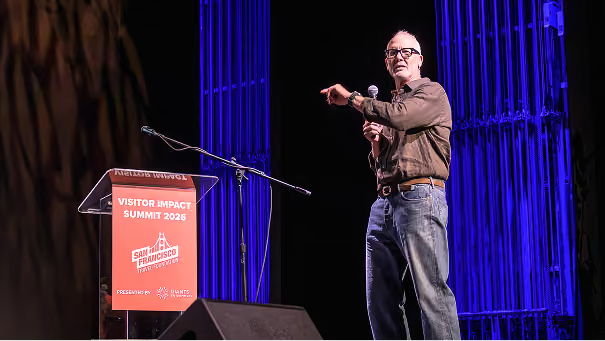
We spoke about feelings and experiences.
We threw out the idea that we’re in the memory business.
Everyone talks about the attention economy. Yes, we have to earn attention first.
But for our work with San Francisco Travel Association, someone might see our TV commercial, and book a trip a few months later.
By then, attention is gone. Hopefully what remains is a memory.
The attention economy is real. A creator monetizes a view at the moment of the view. They trade on the arbitrage between the cost of your attention and what they get paid by either a brand or a media channel or both.
Most brands don't get paid for attention. They get paid for what someone does weeks or months later. Travel has one of the longest gaps between exposure and decision of any category.
Attention is temporary. Memories last.
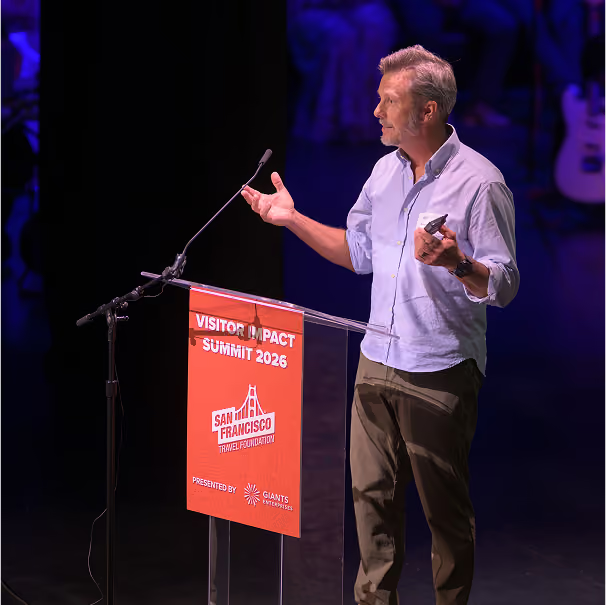
My thinking was influenced by a neuroscientist named Charan Ranganath. He describes how memory actually works. We tend to imagine memory as a recording. Press play, the past returns intact. It doesn’t. Remembering is reconstruction. It’s an act of creation. You rebuild the past every time you reach for it, out of fragments. That memory comes out slightly differently each time.
A memory is a set of materials someone will use to build something later, when you're not there.
That's really our job. To leave behind something worth rebuilding later.
We do that job by telling stories.
Stories are how memories get shared. Telling them is how new ones get made.
This is one of mine:
About three years ago, I took my in-laws to see Dear San Francisco at Club Fugazi. It was a matinee show. A beautiful sunny afternoon.
We put our name in at Tony’s in North Beach and sat on a bench in Washington Square to wait. Because no matter what time of day, there’s always a wait at Tony’s.
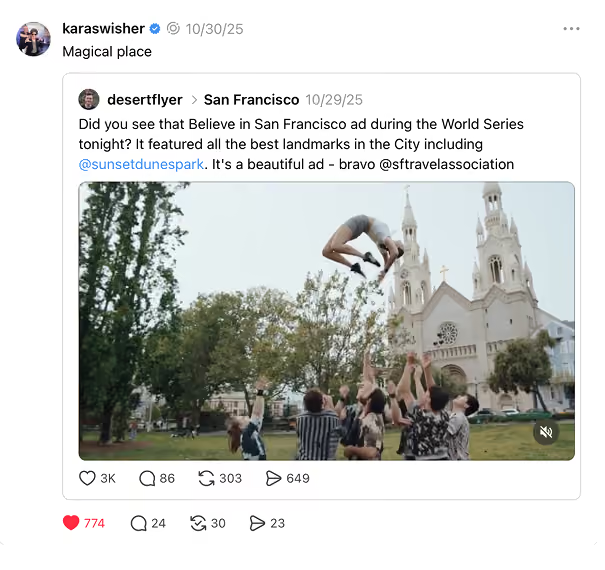
In front of me were acrobats, some from Club Fugazi, teaching people skills in the park.
This moment struck me. It felt like it represented what San Francisco is all about. Creativity. Expression. Community.
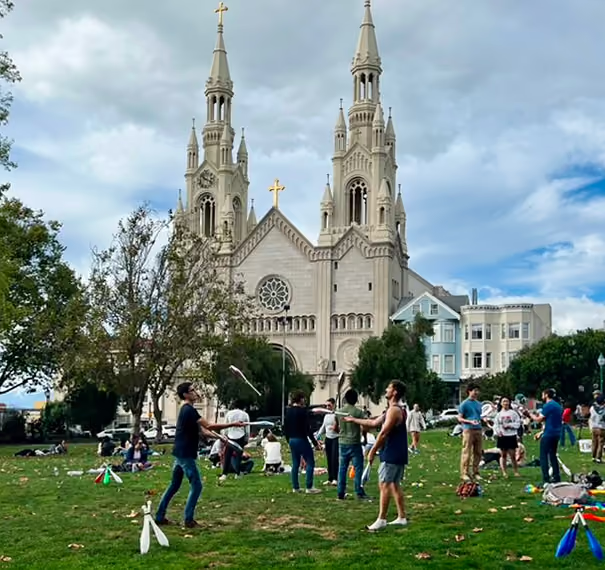
Two years later, we recreated it as a scene.
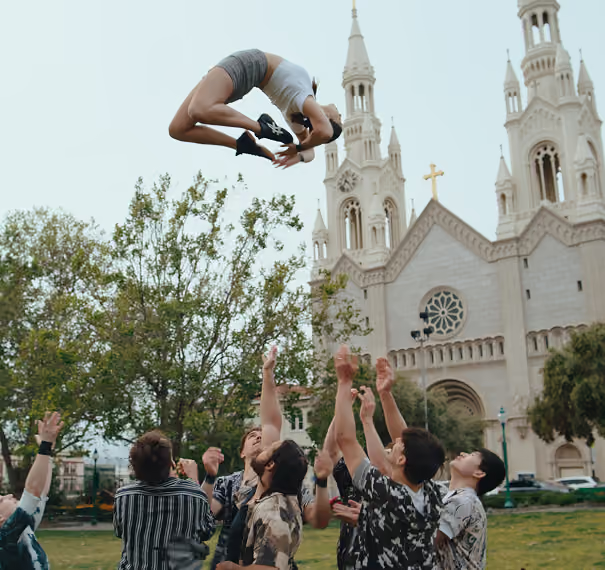
The memory became a scene and that scene became a shared memory.
You can’t remember what you haven’t experienced.
One more thing about that afternoon. The Curran is a building we helped reintroduce to San Francisco about ten years ago, right after a major restoration. Places like the Curran are why people visit places like San Francisco. To see things they couldn’t see anywhere else. To experience things they couldn’t anywhere else.
To make memories they couldn’t anywhere else.


